Featured
Table of Contents
Browsing Financial Fluctuations in New York throughout 2026
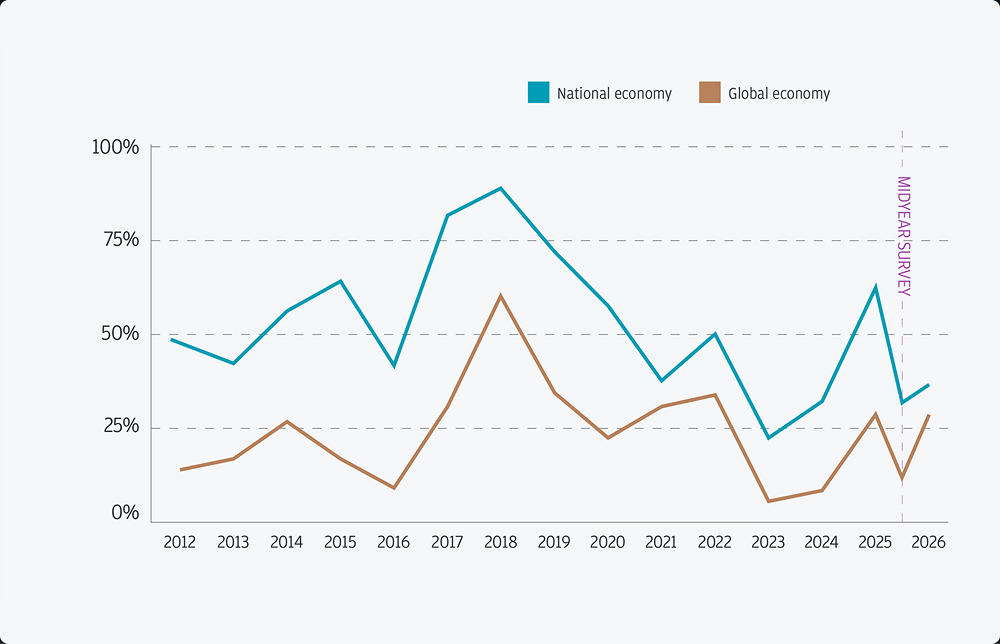
The economic environment of 2026 has actually presented a level of unpredictability that couple of B2B leaders prepared for even two years ago. While some sectors show indications of quick growth, others deal with a contraction driven by moving rate of interest and the cooling of venture capital in particular state-of-the-art specific niches. For organizations operating within New York and throughout the surrounding region, the obstacle involves balancing aggressive growth targets with a market that demands efficiency. The age of development at any cost has actually ended, changed by a focused requirement for quantifiable performance and high-intent lead generation.
A primary motorist of this volatility is the maturation of artificial intelligence in the search sector. By 2026, standard search engines have mainly transitioned into answer engines. This shift suggests that presence is no longer almost ranking in a list of links. It is about appearing within the produced summaries that offer direct answers to complicated B2B inquiries. For business in New York, preserving a presence in these generative outcomes is the difference between a full sales pipeline and a stagnant quarter. Strategic financial investment in Mobile SEO offers a buffer against these market swings, making sure that a brand stays noticeable even as the mechanics of search continue to change.
The Progressing B2B Sales Cycle and Buyer Intent
The B2B sales cycle in 2026 has extended significantly. Current data shows that the typical business offer now involves twelve or more stakeholders, each needing different layers of proof and data-backed reassurance. Purchasers are spending more time in the "dark social" phase-- looking into via personal neighborhoods, peer groups, and AI-driven chatbots-- long before they ever engage with a sales representative. This change needs a digital presence that serves as a 24-hour consultant instead of simply a sales brochure. Organizations that concentrate on digital strategy have adjusted by producing deep, authoritative content that answers technical concerns at every stage of the funnel.
Localized relevance stays a foundation of this strategy. While the 2026 economy is global, the trust required to close large-scale enterprise agreements often stems from regional authority. Decision-makers in New York look for partners who comprehend the particular regulative and financial subtleties of the local territory. Establishing this authority involves a mix of localized search optimization and high-touch digital marketing that speaks to the special difficulties of the local market. Advanced Mobile SEO Programs now requires a blend of traditional intent analysis and real-time data processing to keep pace with these discerning buyers.
The Function of RankOS and AI Browse Exposure

Among the most significant advancements in 2026 is the increase of Answer Engine Optimization (AEO) and Generative Experience Optimization (GEO) The RankOS platform has actually become a central tool for services looking to track how their brand name information is being cited by big language designs and generative search interfaces. Unlike standard SEO, which tracks keywords, AI exposure focuses on entity relationships and topical authority. If an AI engine does not acknowledge a company as a leader in a particular niche, that company simply will not appear in the generated responses provided to possible customers.
Steve Morris, a regular analyst on digital strategy in significant company publications, has highlighted that the presence space is expanding. Companies that neglected the shift to AI search are now finding themselves unnoticeable to a generation of buyers who start every search with a conversational prompt. The exclusive RankOS platform enables the monitoring of these citations, assisting companies in New York and other significant markets like NYC, Chicago, and Los Angeles guarantee their information is accurately represented. Without this level of oversight, a brand name threats being mischaracterized or ignored by the very engines that drive modern commerce.
Diversifying Digital Channels for Sturdy Growth
Economic volatility demands a varied method to digital acquisition. Counting on a single channel in 2026 is a dish for instability. Efficiency marketing, consisting of PPC and paid social, has moved towards extremely automated, algorithmic bidding. These systems require a massive quantity of first-party information to function properly. Organizations that have actually disregarded their data hygiene are finding that their advertising costs are increasing while their conversion rates drop. Those who have prioritized data-driven marketing are seeing much better returns by feeding their AI bidding models with top quality lead information from the start.
Social network marketing in the B2B sector has actually likewise shifted. Platforms that were as soon as seen as simply for brand awareness are now utilized for direct lead capture through integrated ecommerce and lead-gen tools. The combination of ecommerce performance into B2B platforms enables for the frictionless purchase of software-as-a-service or repeating consulting blocks, bypassing the conventional, friction-heavy sales procedure for smaller sized offer sizes. This fluidity is important in a year where purchasers are reluctant to commit to long, dragged out negotiations for every single single service they need.
Efficiency Metrics in a Generative Economy
Measuring success in 2026 needs more than simply taking a look at natural traffic or click-through rates. The metric that matters most now is "share of model"-- the frequency and sentiment with which a brand name is pointed out by generative AI online search engine. Due to the fact that these engines often aggregate information from multiple sources, a business must ensure its details is consistent throughout website design, social profiles, and third-party evaluation sites. Leaders who prioritize Partnership Growth for Digital Brands typically discover that their organic exposure recovers quicker after online search engine updates because they have actually built a foundation of trust that spans the whole web.
In cities like Dallas, Atlanta, and Miami, the competition for search presence is particularly high. The digital company model has progressed to satisfy this, using multi-city support that bridges the gap between local SEO and national brand name authority. By keeping offices in significant centers consisting of Denver and Nashville, the team at the company can supply localized insights that are typically missed by agencies with a single-region focus. This geographical breadth is a significant benefit in an economy where regional shifts can happen overnight.
Strategic Adaptation for Late 2026
As the year advances, the organizations that remain most durable are those that treat their digital existence as a live, developing asset rather than a set-and-forget job. This involves routine audits of AI exposure, consistent refinement of the sales funnel, and a desire to pivot when economic data recommends a modification in buyer habits. The volatility of 2026 is not a short-lived obstacle but a characteristic of a more fluid, AI-integrated market. Businesses in New York that accept this shift and use tools like RankOS to manage their search presence will likely find themselves in a much stronger position as they look towards 2027.
Success in this environment depends on a deep understanding of the intersection between human intent and machine logic. While the innovation has become more intricate, the fundamental need for clear, authoritative, and credible information remains the exact same. Whether it is through advanced SEO, advanced PPC projects, or initial social networks method, the objective is to be the answer to the buyer's problem at the exact moment that problem emerges. For companies in the region, the course to scaling development in 2026 is paved with high-quality data and a commitment to visibility in the brand-new search period.
The role of the CEO has actually also changed in this context. Figures like Steve Morris have demonstrated that leadership now includes a deep technical understanding of how digital systems interact. It is no longer adequate to entrust marketing to a siloed department; it must be integrated into the core business technique. When the economy is volatile, the brand that can clearly articulate its worth through every readily available digital channel is the one that endures the recession and flourishes during the healing. This needs a tough structure that can hold up against the pressures of a fast-moving, AI-centric international market.

Latest Posts
Major SEM Mistakes to Watch for in 2025
Tips for Managing Global PPC Challenges
Evaluating the ROI of Your CSR Strategies